Service
Roof Replacement Cost: What Drives the Price
Nobody can price a roof replacement from a postcode. Size, pitch, covering, access and the state of the timber underneath do most of the work, and two houses on the same street can be hundreds of pounds apart. This page explains each of those factors so you can read a quote properly rather than just comparing totals.
- The seven cost drivers, plainly explained
- Where money is genuinely saved and where it should not be
- Reclaiming your existing slate or tile
- What is nearly always excluded from a cheap price
- Free survey and a written fixed quote
- Fully insured, 15+ years, guaranteed workmanship
The seven things that move the price
Every roof replacement quote you receive is built from these. Ask about any that are missing.
- ▸Roof area in square metres, which is not the same as your floor area once pitch is counted
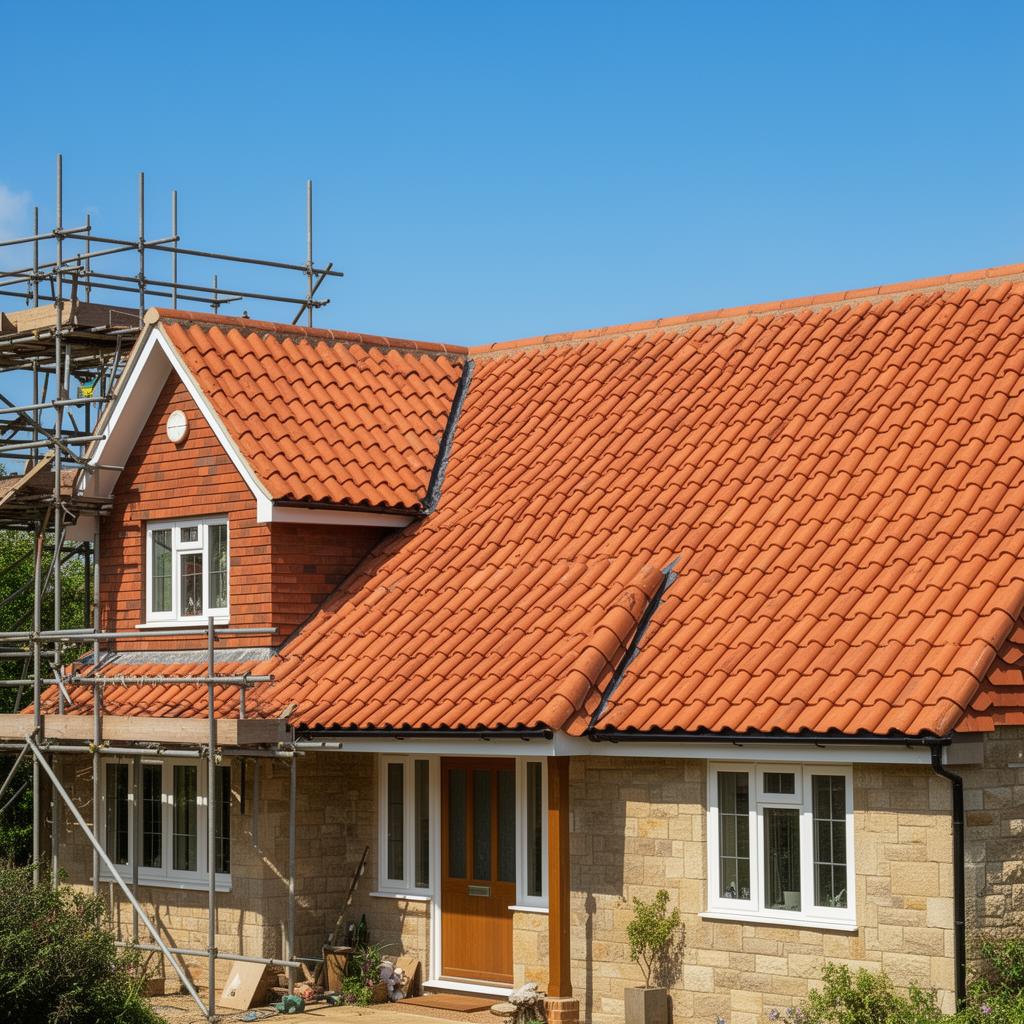
- ▸Pitch and complexity: hips, valleys, dormers and chimneys all add labour
- ▸Covering chosen: concrete interlocking is the cheapest, plain clay and natural slate the dearest
- ▸Access and scaffold, which is a bigger line than most homeowners expect
- ▸Condition of battens, rafters and any rotten timber found once you strip back
- ▸Detailing: lead code at chimneys and abutments, dry ridge and verge systems, new underlay
- ▸Waste removal, because a stripped roof fills more skips than people imagine
Where you can genuinely save
Reclaiming sound slate or clay tile off your own roof is the single biggest saving available, and on a Victorian property it is often realistic. Combining work while scaffold is standing is the second: chimney repointing, fascias, guttering and a rooflight all cost far less done in the same visit than called back for later. Timing helps too, because winter weeks are usually easier to book than late summer.
Where saving costs you later
Thin lead instead of Code 4 or 5, sand and cement bedding where a dry system belongs, reusing old battens, and skipping breathable underlay all shave a quote and all come back. So does leaving the ventilation alone: a sealed modern roof with no airflow sweats, and the condensation ends up blamed on the tiles.
What a cheap price usually leaves out
When one quote is far below the rest, the difference is almost always scaffold, waste, flashings or timber. Ask for the rate that applies if rafters or battens are found rotten, ask what lead code is going on, and ask whether the ridge and verge are mortar or a mechanical dry system. Our surveys are free, our quotes are written and itemised, and the price we give is the price you pay unless you change the scope.
FAQs
Can I get a roof replacement price over the phone?+
We can give you a sense of the range, but not a real price. Pitch, access and the state of the timber cannot be judged from the ground, so we survey free and put a fixed price in writing.
Does a new roof need scaffold?+
For a full replacement, yes. It is a working platform and an edge protection requirement, not an upsell, and we show it as its own line so you can see exactly what it costs.
Can my existing tiles be reused?+
Often on natural slate and clay, rarely on old concrete. We assess a sample area at survey and tell you honestly how much you would get back.
How long does a replacement take?+
A standard semi is usually three to five working days once scaffold is up, and a larger detached property a week to ten days depending on complexity and weather.
Is the work guaranteed?+
Yes. Every replacement carries our written workmanship guarantee alongside the manufacturer cover on materials, and we are fully insured. Call 07962 830361.
Related reading
Other pages homeowners usually look at alongside this one.
Need Roofing Work You Can Rely On?
Speak with Butler Bespoke Roofing for honest advice, a free site visit and a clear, written quote anywhere across Buckinghamshire.