Service
Lead Flashing Replacement
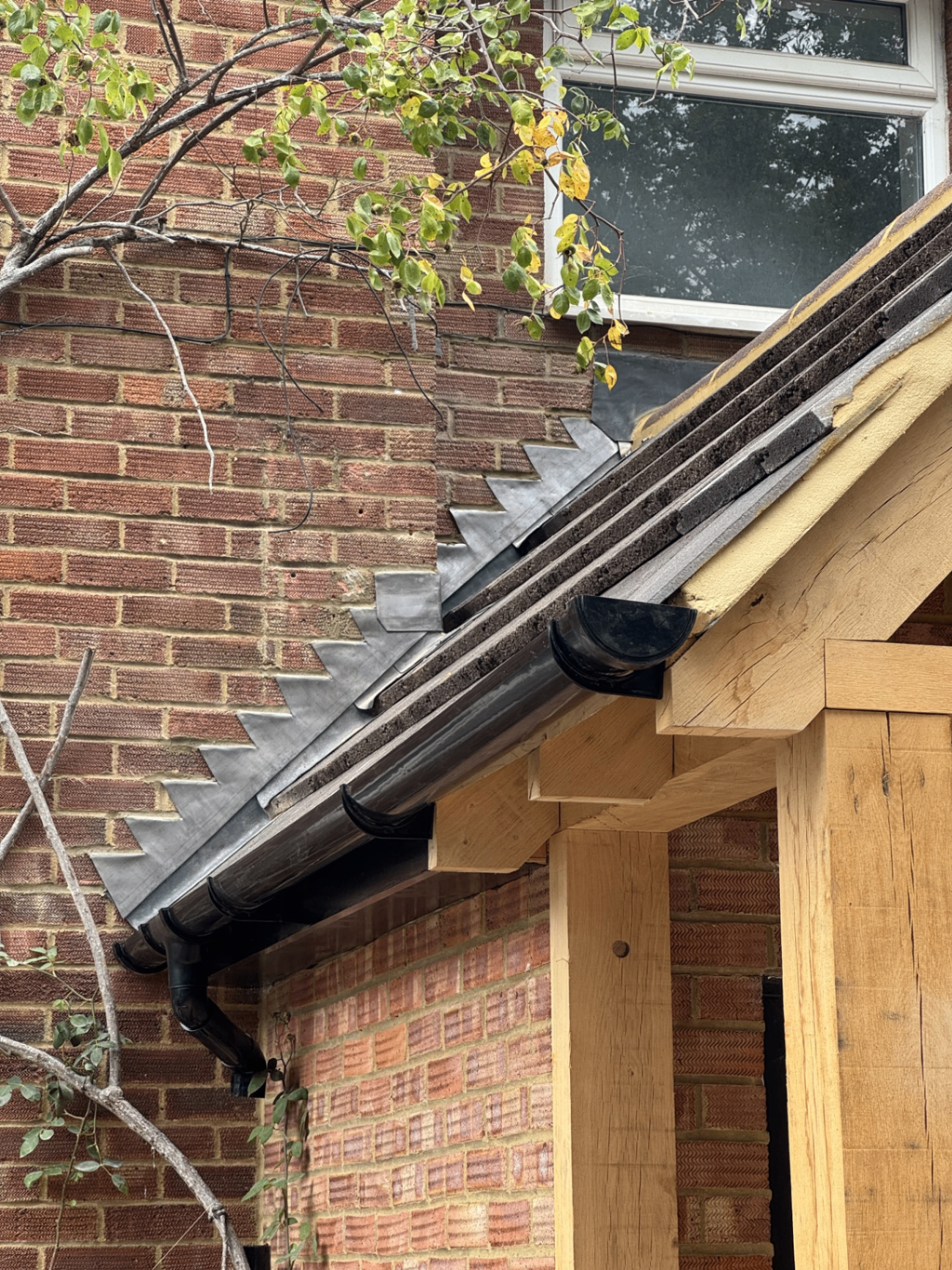
Lead is our specialism. Most chimney and abutment leaks are failed flashings — we strip, dress and re-fit new Code 4/5 lead the way it should be done.
- Code 4 & Code 5 milled lead
- Soakers, step flashings & aprons
- Valleys, gulleys & cover flashings
- Lead-welded box gutters & dormers
- Patination oil finish
- 100-year+ life when laid right
Why lead fails (and why most replacements fail again)
Original lead doesn't fail — it lasts 80–100 years. What fails is mortar fillets and cement 'flashings' that builders use as a shortcut. When we replace, we do the proper job: lead chased into the brickwork, wedged, pointed, and patinated.
Why thickness (Code) matters
Code 3 lead is too thin for anything except small soakers and won't last on exposed flashings. We use Code 4 for most domestic work, Code 5 on chimneys, valleys and anywhere the wind catches.
FAQs
Why is lead so expensive?+
Material cost — milled lead is a significant raw-material item. But it's a once-in-80-years job when done properly, so the lifetime cost is actually low.
Can you weld lead on site?+
Yes — full lead welding for box gutters, dormers and complex junctions. It's how a proper lead detail should be made, not folded and bedded in mortar.
Related reading
Other pages homeowners usually look at alongside this one.
Need Roofing Work You Can Rely On?
Speak with Butler Bespoke Roofing for honest advice, a free site visit and a clear, written quote anywhere across Buckinghamshire.