Service
Warm Roof vs Cold Roof — Flat Roof Insulation Explained
The difference is simply which side of the insulation your deck sits on — but it determines whether the roof stays dry or quietly rots from the inside.
- Warm roof: insulation above the deck
- Cold roof: insulation between the joists
- Cold roofs need ventilation to work
- Warm roofs raise the finished height
- Condensation is the usual failure mode
- We build warm deck by default on replacements
How a warm roof is built
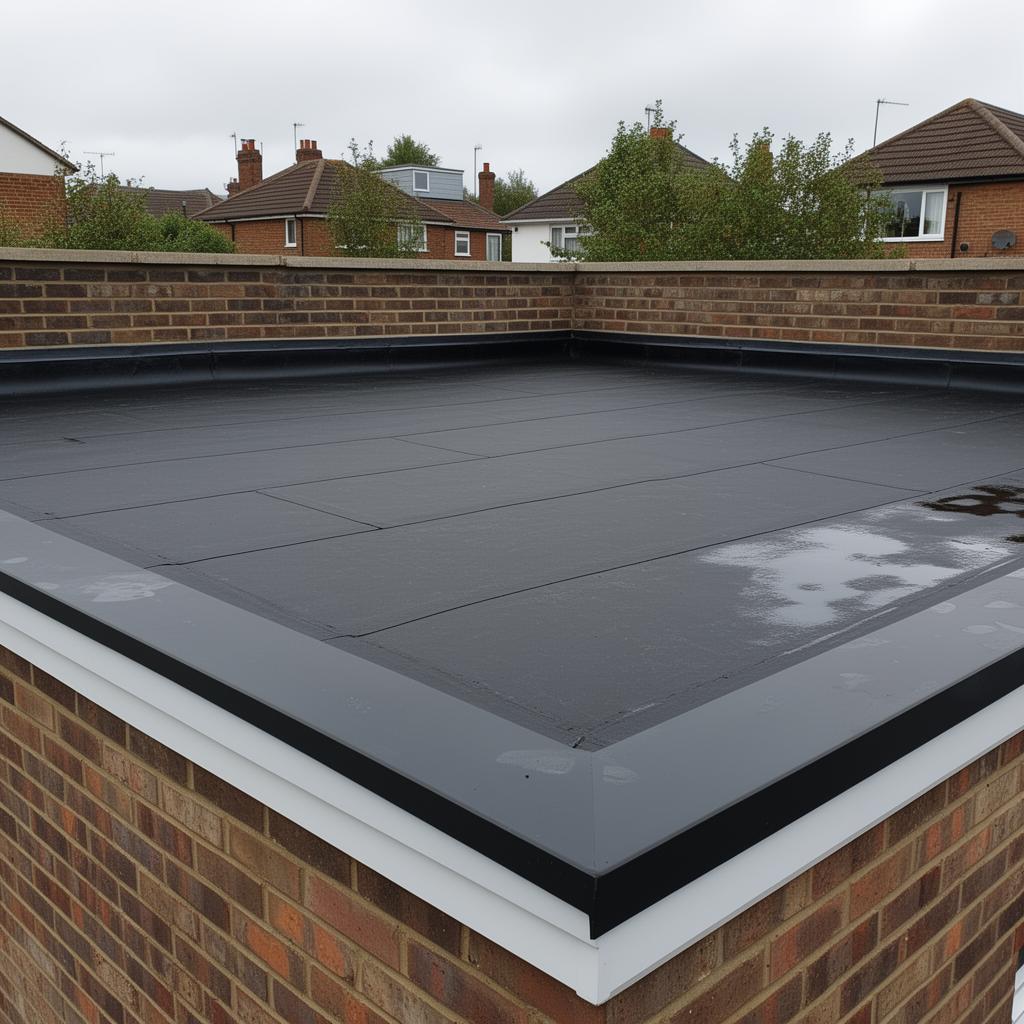
The structural deck goes down first, then a vapour control layer, then rigid insulation, then the waterproof covering on top. The deck and the joists stay on the warm side of the insulation, so warm damp air from inside never reaches a cold surface and there is nothing for condensation to form on. It's the system we specify on almost every flat roof replacement.
Why cold roofs fail
In a cold roof the insulation sits between the joists and the deck above it is cold. Any warm air that gets past the ceiling hits that cold deck and condenses. Done properly there's a continuous 50mm ventilated void with air paths at both ends — but on real houses those paths get blocked by insulation, by a new extension butting up, or by a downstand beam, and the void becomes a sealed damp box.
- ▸Blocked cross-ventilation is the usual culprit
- ▸Downlighters push warm moist air into the void
- ▸Damage often shows as staining, not dripping
What it means for headroom and thresholds
A warm roof adds build-up height, which matters where the roof meets a door threshold, a window cill or an existing abutment. We measure those constraints at survey and, where height is tight, specify a higher-performance insulation board to hit the same U-value in less depth rather than compromising the detail.
FAQs
Do I have to upgrade insulation when I replace a flat roof?+
Where you're replacing the covering and deck, Building Regulations generally expect a thermal upgrade to current standards unless it's not technically feasible. We set out what applies to your roof in the quote.
Can you convert my cold roof to a warm roof?+
Yes — it's the standard approach when the covering is being replaced anyway, as the build-up happens above the existing deck.
Will a warm roof stop my condensation problem?+
If the condensation is forming in the roof void, yes. If it's forming on the ceiling because of a wider ventilation issue in the room, that needs addressing too and we'll say so.
Related reading
Other pages homeowners usually look at alongside this one.
Need Roofing Work You Can Rely On?
Speak with Butler Bespoke Roofing for honest advice, a free site visit and a clear, written quote anywhere across Buckinghamshire.