Service
Code 4 vs Code 5 Lead — What Your Roof Needs
Lead codes are just thicknesses, but getting the code wrong is only half the problem. Most failed leadwork we're called to fails because the bay lengths were too long, not because the lead was too thin.
- Code 4 — most soakers, small flashings and cover flashings
- Code 5 — larger flashings, valleys, chimney backs and aprons
- Bay length limits matter as much as code
- Lead expands and contracts every day
- Correct clips, wedges and patination oil
- Leadwork is our specialism, not an add-on
What the code number means
The code is a thickness rating — the higher the number, the thicker and heavier the sheet. Thicker lead is more robust and more tolerant of movement, but it's also heavier, harder to dress and more expensive, so specifying Code 5 everywhere is not automatically better work.
Where each belongs
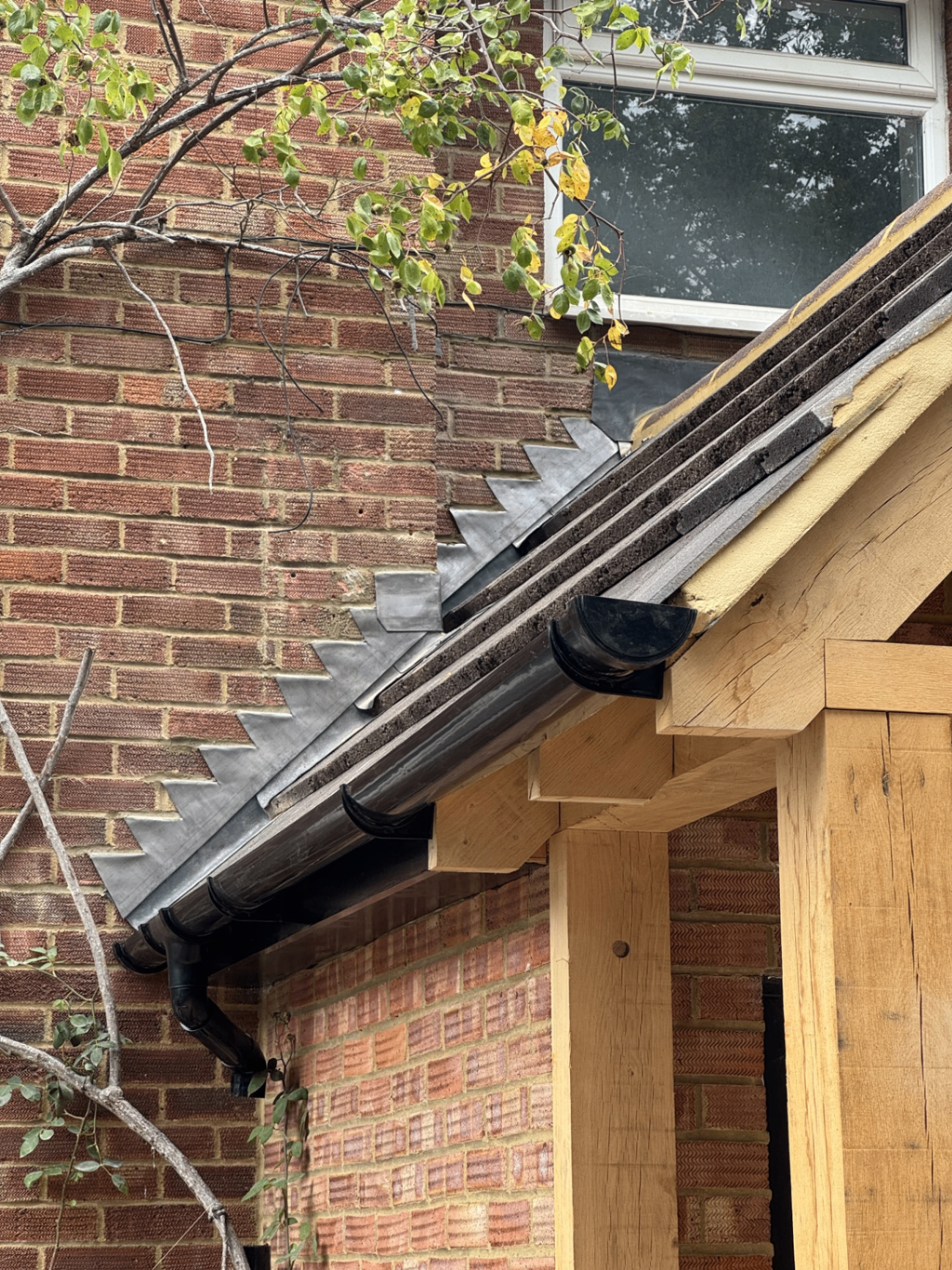
Code 4 handles soakers, small step flashings and short cover flashings well. Code 5 is what we use for chimney back gutters, aprons, larger valleys, parapet gutters and anything carrying volume or exposed to significant movement. Where a detail sits between the two, we go up rather than down — the cost difference on a single chimney is small next to the cost of doing it twice.
- ▸Soakers and small steps: Code 4
- ▸Chimney aprons and back gutters: Code 5
- ▸Valleys and parapet gutters: Code 5
The failure nobody mentions: bay length
Lead moves with temperature — a lot. Run a flashing too long in one piece and it will tear itself at the fixings within a few winters, whatever code it is. That's why proper leadwork is run in bays with laps, clipped at the free edge and wedged into the joint rather than sealed with mastic. If you've had a flashing fail in under five years, over-long bays are the most likely reason.
FAQs
Is thicker lead always better?+
No. Over-heavy lead on a small detail is harder to dress tight and can pull its own fixings. Right code, right bay length, right fixing.
Why has my new lead flashing gone white?+
That's lead carbonate — surface staining from rain on unpatinated lead. Patination oil applied at installation prevents it. It's cosmetic, but it's a sign of a rushed finish.
Do you use lead substitutes?+
Where a client wants one or theft risk is high, yes — but we'll be clear about where a substitute performs as well as lead and where it doesn't.
Related reading
Other pages homeowners usually look at alongside this one.
Need Roofing Work You Can Rely On?
Speak with Butler Bespoke Roofing for honest advice, a free site visit and a clear, written quote anywhere across Buckinghamshire.