
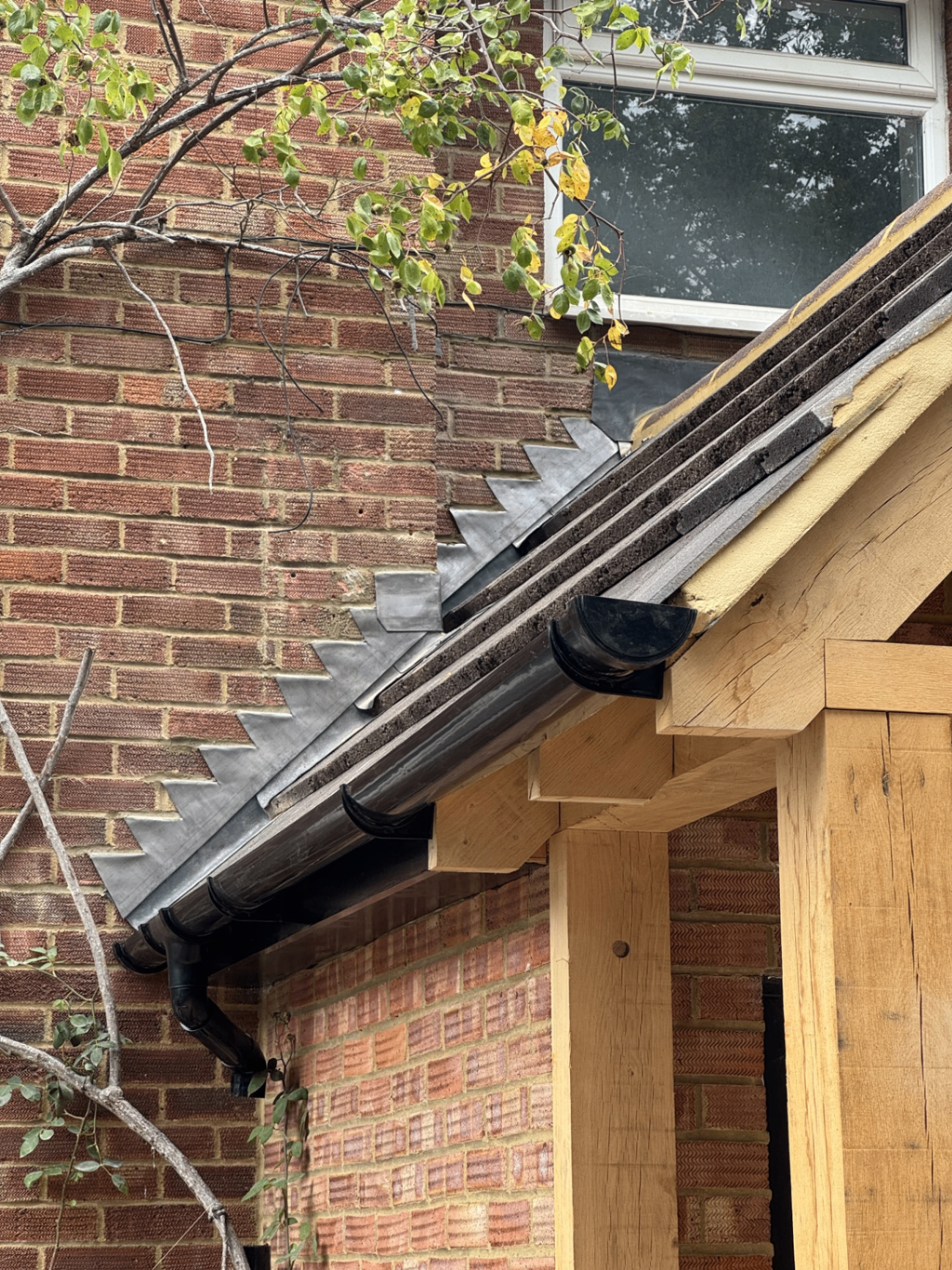
Chimney Flashing Cost (2026) · Buckinghamshire
Chimney Flashing Cost (2026) in Holmer Green
What chimney flashing cost (2026) costs in Holmer Green depends on the roof first, the postcode second. 2.7 miles from our yard via B474.
Why Holmer Green chimney flashing cost (2026) is its own kind of job
A mix of cottage-style clay tile and modern concrete tile roofs. Chimney repointing and lead flashing renewals are typical. We work across HP15 and the surrounding villages. We're regularly in amersham, hazlemere and great missenden too, so Holmer Green call-outs rarely come from a cold start.
- Survey-based Holmer Green pricing
- Staged payments on £8k+ jobs
- Lifetime of properly-fitted lead: 60–80 years
- Add step flashing along side: £120–£220
- Code 4 lead standard, Code 5 on exposed stacks
- Insurance documentation included
Where the Holmer Green money goes on a chimney flashing cost (2026) job
The three things that move a Holmer Green quote up or down are roof complexity (chimneys, valleys, dormers), tile match for the HP15 housing stock, and whether the original battens pass inspection. We itemise the lot in writing.
- ▸No deposit required.
- ▸Insurance documentation if you need it.
- ▸Free re-survey within 12 months.
- ▸Staged payments on jobs over £8k.
How we run chimney flashing cost (2026) jobs in HP15
Pond Lane and Penfold Lane are single-width with no passing places — we run a 6-tonne tipper rather than an 8-wheeler for material delivery to avoid blocking the lane during morning school traffic. On a typical Holmer Green property we'll scaffold or use a tower depending on access from B474, trace the fault to its real source, and quote in writing before work starts. Most Holmer Green repairs we book within the same week.
Holmer Green chimney flashing cost (2026) — the local data
Hard facts that shape every chimney flashing cost (2026) job in Holmer Green — pulled from our own records, Ordnance Survey coordinates and Buckinghamshire Council reference data.
- Postcode districts
- HP15
- County
- Buckinghamshire
- Local authority
- Buckinghamshire Council
- Distance from our yard
- 2.7 miles · ~8 min off-peak
- Coordinates
- 51.6628°N, 0.7165°W
- Main access routes
- B474 · Earl Howe Road
- Neighbouring areas we also cover
- Hazlemere · Great Missenden · Amersham
Housing stock — A mix of cottage-style clay tile and modern concrete tile roofs. Chimney repointing and lead flashing renewals are typical.
Local roofing challenge — Tree-lined lanes mean a lot of leaf-blocked gutters and moss build-up — we combine annual gutter clears with a soft moss treatment that won't damage the tile coating.
On the ground — Properties around the village pond and Earl Howe Road have shared boundary trees with TPOs (tree preservation orders) — any scaffold within crown spread needs council notification, which we lodge before quoting.
Microclimate — Holmer Green's bowl-shape topography traps cold air on still winter nights, so frost damage on north-facing tile coatings starts a season earlier than in higher villages like Penn.
Site access — Pond Lane and Penfold Lane are single-width with no passing places — we run a 6-tonne tipper rather than an 8-wheeler for material delivery to avoid blocking the lane during morning school traffic.
Holmer Green chimney flashing cost (2026) — your questions
Do you cover Holmer Green?+
Yes — Holmer Green is one of our regular areas. We work across HP15 weekly from our High Wycombe base (2.7 miles via B474). Building control notifications go through Buckinghamshire Council where required.
Are these prices accurate for Holmer Green?+
Yes — based on real quotes we've issued across HP15 this year. Final price depends on access from B474, roof complexity and anything found on the site survey.
How far are you from Holmer Green?+
Our yard is in High Wycombe — about 2.7 miles, roughly 8 minutes off-peak via B474. That keeps travel charges down and return visits painless.
Which parts of Holmer Green do you actually work in?+
All of it — HP15 and surrounding postcodes. We're also in amersham, hazlemere and great missenden most weeks.
Why might a Holmer Green quote come in higher than a national average?+
Access, scaffold days and tile matching for the HP15 housing stock all push the number around. That's the kind of local factor a national price calculator misses, which is why we quote on site.
If a quick chat would help, the mobile rings straight through — no gatekeepers between you and the roofer running your Holmer Green job.
Book a Holmer Green chimney flashing cost (2026) survey
Speak with Butler Bespoke Roofing for honest advice, a free site visit and a clear, written quote anywhere across Buckinghamshire.